Dangerous to those who profit from the way things are

research * the future * culture

Bits and pieces

It’s been a crazy week. I wrapped up some stories for a client, snagged another contract, and ate delicious cake at a belated birthday celebration. (My birthday was last week. I turned 29.) Oh, and did my taxes. On time. Like a 29-year-old.

I was also interviewed at Civilian Reader regarding vN.

What’s something readers might be surprised to learn about you?

I’m very short. Like, five feet. It’s the thing that tends to surprise people when they see me up close. It’s not that they thought I’d be taller, or anything. They’re just surprised at the size. One time I was standing in line for a department store cashier, and a little girl in the line beside mine pointed at me and said: “Mommy, why is she little?” True story.

Then, Julia at The Creators Project asked me (and lots of other people who have more degrees than I do) to talk some more about the New Aesthetic:

…not only does the New Aesthetic take as given a heretofore-feminine vulnerability among the humans being surveilled, but also treats the surveilling machine eye as technologically immature and therefore morally innocent. By returning to the blocky, colourful 8-bit world that informed the childhood experience of so many artists of the New Aesthetic, they imbue the surveilling eye with a similar youthful innocence. They have looked into the black dome, and seen their own naiveté reflected in its gleaming surface.

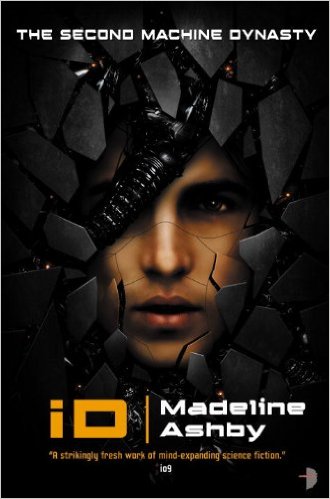
And then to cap it off, vN received a jaw-droppingly good review at io9. (So good, in fact, that Karl called us during dinner just to let us know about it. At first, from the way Dave stopped chewing, I suspected terrible news. But no! It was great news!)

It’s a strange, dazzling look at the world through the eyes of a rogue artificial woman, who sees things in an off-kilter fashion, and becomes the most dangerous robot in the world as a result. You get drawn into the lush, disturbing world, seeing it through the eyes of a robot, and soon enough you’re losing your whole sense of reality. The familiar human world will never look the same again.

Damn. I’m really humbled by those words. They make all the hard work worth it. Dave read this review aloud to me (and to our very patient dinner companions), and I wasn’t sure whether to laugh or cry or drink more of my Guinness. I may have done all three.

Speaking of Dave, he was also interviewed this week, about his upcoming novel Rasputin’s Bastards. In the interview he describes our office:

I just moved into an apartment in a space that was the hayloft of an old stable in east-end Toronto, along with science fiction author Madeline Ashby. For all the rustic romanticism of that description, the apartment is quite modern and the workspace is pretty standard-issue home office.

This is an accurate description, but it’s lacking our cat. Lucy, the elderly babushka brown tabby with the bad hip that we took in last March, usually spends her time watching one or both of us while we’re writing. Her habit is to yowl and moan until one of us retrieves her and deposits her on the unoccupied chair, at which point she dispenses a stern lecture to anyone who will listen, curls up, complains about her hip, and then falls asleep. Seriously. It’s just like having a co-worker who tells everyone about her terrible arthritis, and the only time you get anything done is when she falls asleep dreaming of mice.

Bordertown, Surveillance, and the Evil Eye

Last summer, I participated in the Bordertown design studio, a ten-week seminar on the subject of cities divided by borders. Everyone involved developed a deliverable, which we exhibited at the Detroit Design Festival. At the time, I was too blown away by the city of Detroit and its inhabitants to talk about my own work. (Also, I was editing my debut novel and finishing work on my thesis, writing some pieces for BoingBoing and trying to find another job.) I didn’t have a lot of perspective on my installation. I had never exhibited anything, before, and I didn’t really think of myself as an artist. An artistic person, yes, but not an “artist”; a design thinker, but not a “designer.” But I’ve always been secure in my identity as a writer, so it’s not surprising that I wrote fiction for my installation.

From Detroit

My installation involved a kitbashed laptop, a coffee mug, some index cards, cookies, sticky notes, Greek holy cards, and glass jewelry to protect against the Evil Eye. In the world of the installation, a police detective is investigating the death of a wealthy girl from the Turkey at the hands of a Greek border guard…or was it Greece’s shiny new threat analysis system that made the decision for him? It was up to the visitor to decide, by piecing together clues left at the site of the installation. The detective was almost past caring, having already focused almost obsessively on the nature of surveillance and its relationship to the Evil Eye.
Read the full article »

My Ad Astra 2012 Schedule

This weekend, I’ll be at Ad Astra, my local SF convention. (Well, one of them.) While I’m there, I’ll be on a bunch of panels. Here’s the list:

  • Saturday, 10am, Floor 2 Salon 2, The Future of Food (with Leah Bobet)
  • Saturday, 2pm, Floor 2 Salon 1, Reading (with David Nickle)
  • Saturday, 7pm, Franklin, Food in Fiction
  • Sunday, 1pm, Floor 2 Salon 3, Sequels: How Do They Work? (with Peter Watts)
  • Sunday, 3pm, Franklin, Community vs. The Big Bang Theory (with Matt Moore & Adam Shaftoe)

I’m excited (and a bit intimidated by the size of) about this schedule, mostly because I’m doing another reading from vN, and because I’ll be reading alongside my best friend and partner, David Nickle, who just happens to be one of the best readers out there. It’s the kind of moment I’ve spent a long time thinking about, and I’m happy it’s finally here. It’s also a moment of lovely synchronicity — totally unbeknownst to one another, we each asked the folks in convention programming if we could read together. Aww.


About those DARPA robots…

DARPA has decided it would like a humanoid robot sometime in the near future, and is willing to pay you to build it.

Here are the reasons I’m excited about this news:

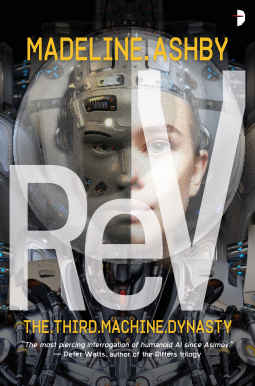
  • I’m writing a series of novels about humanoid robots. (Scroll down for some most excellent blurbage.)
  • DARPA has agreed to allow unpaid teams to enter the Grand Challenge competition. This means that hackers/makers/NewAesthetes/kitbashers can get in on the fun. You there, in your garage! This means you! Hie you hence to Active Surplus!
  • DARPA projects have a way of spinning out into other projects. We might not get a fully autonomous humanoid robot, but we probably will get several different methods of saving human lives and repairing the things humans break. Basically, it looks like they want this robot to be able to find people in disaster-struck areas and rescue them, or move debris around so that medical personnel can work safely. Either way, it’s a win. And in the meantime, we’ll get a lot more advancements in object detection, natural language processing, and motorizing fine motor skills.

Here are the reasons I’m not so excited about this:

  • I’m writing a series of novels about humanoid robots. And in them, DARPA is not involved in their creation. Well, not directly. They probably funded a lot of the initial research, much as they’re doing here, but the final vision of the vN — and crucially, the failsafe — was funded by tithes to a Rapture-oriented mega church. I chose this because humanoid robots, while fascinating, are an inefficient use of useful technologies, and I felt like I couldn’t quite justify what I was putting down on paper. There have been a lot of stunning advances in robotics lately, from modular units to Big Dog to throwing arms, but until now very few companies or labs focused on Frankensteining those technologies into one human-shaped product. And the ones that have — the Japanese ones — aren’t necessarily concentrating on autonomous robots, but on telepresence puppets. That’s because we can already do all the things we wish robots could do. We spent tens of thousands of years evolving the abilities we take for granted: walking, talking, hearing, grasping, thinking. It’s hard to code those things in to another form, and it’s inefficient to build all those abilities into a generic mass-production model when we already do so well with them. The problem is that we just can’t do them without suffering, in certain contexts and environments. That’s one of the reasons DARPA wants a humanoid robot. To do our suffering for us.
  • A lot of that suffering could be avoided if we would just stop causing it, in the first place. DARPA’s robots — all of them, from the pack-bots to the drones to the ‘noids — are intended as defense units. They’re funded by the military, for the military. This isn’t to say they can’t help civilians — we could have really used some excellent robotics during Hurricane Katrina, for example, and I’d be disappointed if the National Guard didn’t get access to some of these units when they’re finished. But the thing is, we wouldn’t have to build these robots if our human forces weren’t spread so thinly. And I don’t just mean in Iraq and Afghanistan (and probably Pakistan and Iran, soon). I mean all the bases the United States has in other countries. I mean the military-industrial complex in general. I mean that it’s sad that DARPA has to fund these awesome projects, and that we don’t have a similar organization with similar resources dedicated to funding awesome solutions for problems like clean energy and climate change.

In general, though, I’m pretty excited. Robots! Who doesn’t love them?

The New Aesthetics of the male gaze

Since Bruce Sterling’s excellent post at Beyond the Beyond covering “The New Aesthetic” panel at SxSW ’12, a lot of other entries have sprung up talking about it. I thought I’d round some up:

Personally, my favourite has to be POSZU’s, just for this:

The New Aesthetic reeks of power relations. Drones, surveillance, media, networks, digital photography, algorithms. This is largely about the technology of “seeing”, and how we see this new technology of seeing. But the technology is also for watching. The ability to watch someone is a form of power. It controls the flow of information. “I know everything about you, but you know nothing about me.” Or, “I know everything about you, and all you can do is make art about the means by which I know things.”

As someone who wrote a Master’s thesis on border security, and who earned some money from a project on the intersection of the digital and the physical, you can see why I’d be interested in the sudden codification and definition of this type of thing.

What concerns me about the links I’m seeing is that they’re mostly written about men, by men. Part of this may have to do with the predominance of men in tech reporting, but it’s also likely symptomatic of the way girls can be shut out of hacking practises because they have the temerity to be interested in haptic fashion. When guys do it, it’s an “art movement.” When girls do it, it’s “arts and crafts.”

But that power differential, while disappointing, should not be surprising. To build on POSZU’s statement, if the New Aesthetic is also about the politics of the gaze, that gaze has usually been male — ask Laura Mulvey or Carol Clover. Moreover, the massive expansions of NSA surveillance facilities are less likely to include women, because universities are failing to entice women to study computer science. The people wiretapping you without a warrant? Most of them are men.

What intrigues me about this is that just as the New Aesthetic is flush with women hacking their information and taking control of the messages they present, the NSA is training a generation of men to take up habits that were once considered stereotypically feminine: eavesdropping, curtain-twitching, and gossiping. The NSA is funding a generation of Mrs. Grundys, and they just happen to be men. These two dynamics feed each other. We share more and more information, and They pick it up, but We know They’re picking it up, so We share more creatively, but They take that as evidence, so We wear ugly t-shirts….and on, and on, and on. It’s a conversation.

The fact that it’s a conversation between artists and the forces observing them is nothing new. We’ve been through this before. We used to design cathedrals so grand God had to notice. Now we print the pattern of faded denim jeans on linen pants so cleverly the Internet has to notice. We crochet masks so facial recognition-enabled cameras won’t notice. Someone is always watching. Someone has always been watching.

If you’re a woman, you’ve probably known that your whole life. It started with somebody — probably your mother — telling you how to sit, how to dress, how much to show, what to reveal, what not to reveal. Your skin, your smell, your opinion. Secretly, you wondered, “Does anybody actually notice this kind of thing?” And then, somebody did. A guy. A guy who shouted at you across the street: “HEY! SMILE! YOU’D BE A LOT PRETTIER IF YOU JUST SMILED! THERE! THAT’S BETTER!” A guy with a friend, who did a U-turn in his truck just to say that he thought he’d seen you somewhere before, and what were you doing later? A guy who asked if you were pregnant, because you were starting to look a little thick. A guy who told you to get some sleep, because you looked terrible.

Apparently, it took the preponderance of closed-circuit television cameras for some men to feel the intensity of the gaze that women have almost always been under. It took the invention of Girls Around Me*. It took Facebook. It took geo-location. That spirit of performativity you have about your citizenship, now? That sense that someone’s peering over your shoulder, watching everything you do and say and think and choose? That feeling of being observed? It’s not a new facet of life in the twenty-first century. It’s what it feels like for a girl.

Gentlemen of the New Aesthetic, I suggest you listen to the ladies in your life as you design for the emergent properties of security technology. They’ve been dealing with unwanted attention for a lot longer. Ladies of the New Aesthetic: keep on keeping on. Keep making. Keep creating. Keep lilypadding. And remember to demand better. Most of the time, you’ll get it.

*Charlie is not one of those guys just waking up to this phenomenon. He takes it up beautifully in his novel Glasshouse, which I recommend highly.

Another reason I’m happy to live in Canada:

Today, Ontario’s top court legalized brothels, with the intent to protect sex workers.

Snip:

All five judges said the law prohibiting the operation of bawdy houses “is grossly disproportionate” to its stated aim of avoiding disorder and maintaining public health standards.

“The record is clear that the safest way to sell sex is for a prostitute to work indoors, in a location under her control,” they said.

The court emphasized that prostitutes are forced to break the law if they work indoors. The risk of being killed or maimed by violent customers undeniable, they said.

“The impact on those put at risk by the legislation is extreme,” the court said. “We have no hesitation endorsing the application judge’s holding that the impact of the bawdy house prohibition on prostitutes, and particularly street prostitutes, is grossly disproportuonate to its legislative objective.”

This is an issue that really resonates with me as someone who grew up in the same setting as the Green River Killer. He was still active in my part of Western Washington while I was young, and I remember paying attention each time KING 5 had news about the latest body of a young woman, allegedly a prostitute, discovered strangled and molested in the woods. Little did I know that only a few hours north, Robert Pickton was also killing alleged prostitutes, and feeding their bodies to the pigs on his farm. And although Pickton had been active since at least 1997, and police suspected him of murdering women from Vancouver’s East Side, charges against him were dropped because the sex workers who warned police about him were deemed unreliable.

These aren’t men who killed two or three women. They each killed fifty. And those are the ones they remember. And now it’s happening again, in Long Island.

If sex workers were free to speak up without fear of reprisal, how many more women would be alive today? How many abusive pimps would be in jail? How many human trafficking rings would be broken up? How much suffering could be alleviated, if we simply gave all sex workers, everywhere, the security they need?

It seems like these are the same questions Ontario’s top courts are asking. I’m very proud of them, today. It’s obvious now that, as Sheryl WuDunn and Nicholas Krystof point out, women and girls aren’t the problem, they’re the solution to the problems of poverty and suffering. That includes sex workers. I know the case will probably go up to the Supreme Court, but I hope the progressive spirit of this ruling remains.

The prologue of vN is live!

And you can read it right here! Special thanks to Rudy Rucker for deciding to share it with everybody.

Coincidentally, I am now sitting in almost the exact same location I was when I wrote the first draft of this little vignette, way back before I knew it was a novel, and long before I had any inkling that anybody would want to publish it. I’m on retreat with my writers’ workshop, and it was on just such an occasion that I wrote the prologue to the prologue to vN. It was a wet, cold, and gloomy Saturday, and by the time I finished, my bones ached from resting in one position for too long. But my head was clear of the vision I’d had, and I felt like I’d really accomplished something. I just had no idea of what that something was.

Originally, I had wanted to write a story about a man discovering that his wife and daughter are self-replicating humanoid machines. I had a whole scene written in which he caught his daughter eating sand on the beach, unaware that she was trying to process it into silicon. Then I realized that I was writing a Twilight Zone episode, and that those had already been done, and better, decades earlier. So I started fresh, and inverted the revelation. Jack knew his wife and daughter were robots. What he didn’t know was what they could do.

(A sidenote: on an airplane this winter, an ad man from London saw me gazing at the cover of my book — I know, I know — and asked me: “So, does she know she’s a robot?” I nodded emphatically and said: “Oh yeah. She knows. And she’s happiest, that way. She doesn’t want to be a human being. She can’t imagine why anyone would.”)

Now I’m back in the same place as I was back then, and I’m working on the sequel to vN, tentatively titled ID. I’m hoping for another epic day of writing just like that last one, years ago. A lot in my life has changed since that day: my relationship, my education, my job(s), my understanding of myself. But this place, and what I do here, has not. I’m profoundly grateful for that. I am surrounded by rain-soaked trees and rusted trucks. I am listening to The Fragile for what is likely the thousandth time. I’m still me, and I’m still doing the same thing I’ve always done, in one way or another. It’s great.

What fiction can do: or, a word on Mike Daisey from someone who’s met him

I met Mike Daisey after his performance of The Agony and the Ecstasy of Steve Jobs at the Seattle Repertory Theatre, during the spring of 2011. At the time, Steve Jobs was still alive, and the theatre served free apple-tinis to patrons who came in cosplaying him. Black turtlenecks were in abundance. One of my oldest friends wore one, and shared his drink with me. (It was surprisingly strong.) This same friend then shook hands with Daisey and thanked him for the show, and I followed suit. I even recall asking him when he would be on The Daily Show or Colbert Report. He was that good, and, I thought, that relevant.

Like Daisey, I’d written about Foxconn before. I did it as a science fiction writer, and at the time I thought he’d done it as a professional storyteller — a performance artist whose work was nevertheless rooted in his research of a time, place, and people. Of course, now we all know that this was not true, and Daisey embellished and fabricated much of the “true” stories contained in his performance, not unlike James Frey did in his “memoir” A Million Little Pieces. How I feel about this personally is best summed up by Adrien Chen at Gawker, who has since described how he was duped by Mike Daisey’s lies. But how I feel about it aesthetically is another, more complicated matter.
Read the full article »

Girls, Women, and Choice: Why you should watch Madoka

I’ll admit it: I’m late to the party, on this one. Since January 2011, the anime-watching public (online and off) has been enamoured of Puella Magi Madoka Magica, and I’ve been scoffing at it. They said it was deep. I scoffed. They said it was meta. I scoffed. They said to give it some time. I scoffed.

And then I caught myself rooting for the zombies on The Walking Dead, and started craving good anime as an antidote to my television malaise. Around that time, Crunchyroll started streaming the entire series. After the first episode, I was hooked. But it wasn’t until the fourth episode that I realized why.
Read the full article »

And now a word from Ursula K. LeGuin re: abortion

“What was it like, in the Dark Ages when abortion was a crime, for the girl whose dad couldn’t borrow cash, as my dad could? What was it like for the girl who couldn’t even tell her dad, because he would go crazy with shame and rage? Who couldn’t tell her mother? Who had to go alone to that filthy room and put herself body and soul into the hands of a professional criminal?–because that is what every doctor who did an abortion was, whether he was an extortionist or an idealist. You know what it was like for her. You know and I know; that is why we are here. We are not going back to the Dark Ages. We are not going to let anybody in this country have that kind of power over any girl or woman. There are great powers, outside the government and in it, trying to legislate the return of darkness. We are not great powers. But we are the light. Nobody can put us out.”

From Dancing at the Edge of the World: Thoughts on Words, Women, Places

In case you hadn’t guessed it, LeGuin is one of my personal and professional heroines. She’s a huge part of why I’m a science fiction writer. At this moment in American politics, I’d like to thank her for saying it so much better than I ever could. She wrote those words in 1982. It’s tragic and demoralizing that her words remain so pertinent in 2012. Luckily, their quality remains equally timeless.